
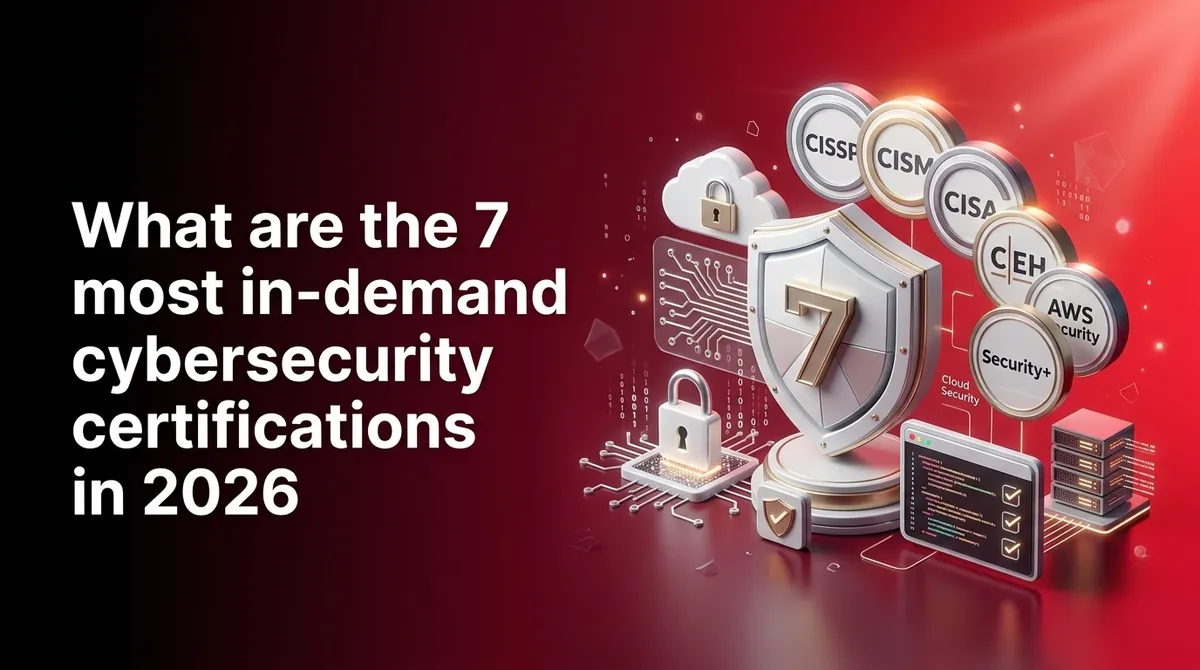
Explore the top cybersecurity certifications in 2026 and boost your career with hands-on skills and DoD placement opportunities.
The Fusion Cyber team comprises certified cybersecurity professionals and instructors with backgrounds spanning DoD, federal agencies, and defense prime contractors. Learn more at fusioncyber.co.
Overview
In 2026, the cybersecurity landscape is defined by a pressing need for skilled professionals equipped with the right certifications. As cyber threats evolve, so does the demand for experts who can navigate complex security environments. This article delves into the seven most sought-after cybersecurity certifications that are opening doors to lucrative careers across the defense industrial base, federal agencies, and critical infrastructure sectors.
Our focus is on providing actionable insights into each certification, detailing their relevance, the skills they impart, and the career paths they unlock. Whether you're transitioning from the military, switching careers, or starting fresh, understanding these certifications is crucial for aligning your training with industry needs.
By exploring this guide, you'll gain clarity on what certifications to pursue, how they can elevate your career, and the practical steps to acquire them. From salary expectations to common pitfalls, our goal is to equip you with the knowledge needed to make informed decisions about your cybersecurity journey.
Why Are Cybersecurity Certifications Important?
Cybersecurity certifications are pivotal in validating a professional's skills and knowledge in protecting information systems. These certifications serve as a benchmark for employers to assess a candidate's expertise and readiness to tackle cyber threats. In sectors like the DoD, federal agencies, and critical infrastructure, certifications often determine eligibility for roles that require specialized skills.
Certifications like CISSP and CEH not only enhance one's resume but also provide a structured learning path that covers essential cybersecurity concepts, tools, and practices. According to CyberSeek, the demand for certified cybersecurity professionals continues to grow, with some roles offering salary premiums of $20,000 to $50,000 for those with TS/SCI clearances. This makes acquiring certifications not just a career boost but a strategic move to secure higher-paying positions.
What Is the Certified Information Systems Security Professional (CISSP)?
The CISSP certification is a globally recognized credential that signifies a deep understanding of cybersecurity concepts and best practices. It's ideal for professionals aiming to advance in roles like security analyst, security architect, or chief information security officer. The CISSP covers eight domains, including security and risk management, asset security, and software development security, making it comprehensive in scope.
To achieve CISSP certification, candidates must have at least five years of paid work experience in two or more of the CISSP domains. Preparation involves studying the official CISSP study guide, practicing with online question banks, and participating in study groups. The certification is highly regarded by employers, particularly in the defense and federal sectors, where it often serves as a prerequisite for key positions.
Understanding the Certified Ethical Hacker (CEH) Certification
The CEH certification is designed for those interested in ethical hacking and penetration testing. It equips professionals with the skills to think like a hacker, enabling them to better anticipate and mitigate potential threats. The CEH curriculum includes modules on system hacking, network scanning, and vulnerability analysis, using tools like Metasploit and Nmap.
Earning a CEH certification requires passing the EC-Council's rigorous exam and demonstrating proficiency in ethical hacking techniques. This certification is particularly valuable in roles that involve offensive security strategies, such as a penetration tester or security consultant, and is recognized by employers across the defense and tech industries.
What Does the CompTIA Security+ Certification Entail?
CompTIA Security+ is an entry-level certification that lays the foundation for a career in cybersecurity. It covers essential aspects of network security, cryptography, and identity management, providing a comprehensive introduction to the field. The certification is vendor-neutral, making it applicable across various sectors.
Preparation for the Security+ exam involves studying topics such as threat management, risk assessment, and access control. Many candidates supplement their learning with practice exams and online courses. It is often the first step for individuals transitioning into cybersecurity, offering a solid base from which to pursue more advanced certifications like CISSP or CEH.
Why Choose the Certified Information Security Manager (CISM)?
CISM certification is aimed at individuals interested in management roles in cybersecurity. It focuses on the governance and management of enterprise information security programs. CISM-certified professionals are skilled in risk management, incident response, and information security governance.
To earn CISM certification, candidates must pass a comprehensive exam and have at least five years of work experience in information security management. The certification is highly valued by employers in sectors such as finance, healthcare, and government, where security management is a critical function.
The Value of GIAC Security Essentials (GSEC)
The GSEC certification validates a practitioner's ability to handle a broad range of security tasks, from network security to incident handling. Unlike many other certifications, GSEC does not require prior work experience, making it accessible to beginners.
The GSEC exam tests knowledge across various security domains, including access control, cryptography, and network security. This certification is particularly beneficial for those looking to establish a strong foothold in cybersecurity and is respected by employers who value practical skills and hands-on experience.
Exploring the Certified Cloud Security Professional (CCSP)
CCSP certification is ideal for IT professionals who specialize in cloud security. It covers key areas such as cloud architecture, governance, and compliance, reflecting the growing importance of cloud technologies in modern businesses. CCSP-certified professionals are equipped to design, manage, and secure data, applications, and infrastructure in the cloud.
Candidates need to have at least five years of IT experience, with three years in information security and one year in cloud security, to qualify for the CCSP exam. This certification is increasingly sought after as organizations shift more operations to the cloud, making it a valuable asset for career advancement.
What Is the Certified Information Systems Auditor (CISA)?
CISA certification is tailored for professionals focused on auditing, controlling, and securing information systems. It is especially relevant in roles that require oversight of IT governance and assurance processes. The CISA exam assesses skills in auditing information systems, IT management, and the protection of information assets.
Achieving CISA certification requires a minimum of five years of professional experience in information systems auditing, control, or security. It is highly regarded in industries such as finance, government, and healthcare, where compliance and risk management are paramount.
Where to Build These Skills
Everything above is practice-dependent, which is why we built FusionRange — students run live Splunk threat hunts against the same telemetry patterns a defense contractor SOC sees. RangeSherpa, our 1:1 AI voice tutor, walks students through a live lab in real time — the difference between reading about a Splunk query and running one under time pressure.
BeaconAI, our adaptive learning ecosystem, empowers personalized skill development. See BeaconAI in action with our 601+ alumni who have been placed in DoD, federal agencies, and critical infrastructure sectors, achieving an average salary increase of 102% three years post-completion. Consider enrolling in our AI Cyber RMF & Defense program to further enhance your cybersecurity journey.
Frequently Asked Questions
Common questions and detailed answers about this topic
Resources & Further Reading
Trusted references and external documentation
Author's Thoughts
In our exploration of the top cybersecurity certifications for 2026, it's clear that these credentials are essential for anyone aiming to make a significant impact in the field. Each certification offers unique advantages that align with different career paths, from ethical hacking to cloud security management. As cybersecurity threats grow more sophisticated, being certified not only enhances your skill set but also positions you as a valuable asset to employers.
From our experience, the key to success in obtaining these certifications lies in practical, hands-on experience. Studying theory is important, but applying that knowledge in real-world scenarios is what truly prepares you for industry challenges. That's why we emphasize practice-based learning in our programs, ensuring our graduates are job-ready from day one.
At Fusion Cyber, we're committed to developing the next generation of cybersecurity professionals. With over 601 alumni successfully placed across defense and federal sectors, our FusionRange AI cyber range labs and BeaconAI adaptive learning platform are designed to offer the most comprehensive training experience. Consider joining our AI Cyber RMF & Defense program to advance your career. Find a Fusion Cyber Program at a University Near You.
This article answers:*
- What are the top cybersecurity certifications in 2026?
- How to get a cybersecurity certification?
- Benefits of CISSP certification in 2026
- Best entry-level cybersecurity certifications
- How can veterans transition to cybersecurity careers?
© 2026 Fusion Cyber. All rights reserved.